|
June 12th 1915
:
The
sun rose early in the morning, it was a clear sky and very quiet
although occasionally one could hear a rifle shot. Italian heavy
artillery had not yet started firing because both sides were enjoying
breakfast.
Unknown
to the Italians, behind hill “Costa Alta” within Austrian defence
lines (at Millegrobbe) a small group of Austrian soldiers and officers
were very busy.
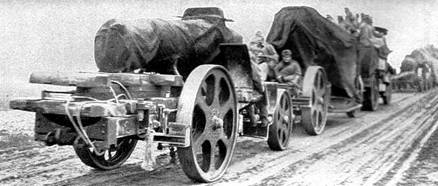
Mortar
batteries from
Russia
hastily being
transported to the next railway station bound for
Trento
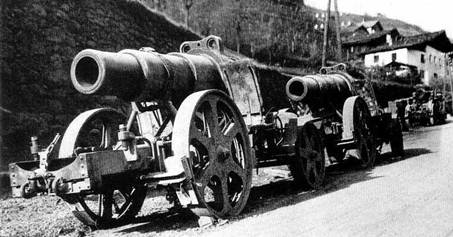
Mortar
battery stopped in
Trento
on the way to
Lavarone .
With
the help of many volunteers, heavy shells were being moved, and powder
cans loaded. Two Austrian observation officers were looking at
topographical maps while communi
cat
ing on a field
telephone.
One
officer raised his head…. heavy winds were coming
from the South. He looked at his trajectory tables and thought
…”it’ll be difficult
but we’ll do our best”..
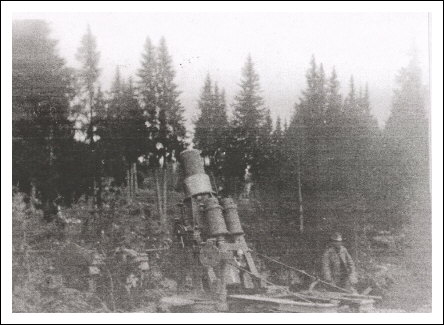
A
rare photo of the mortar at Millegrobbe which destroyed
Fort
Verena
in his original
position
At
the same time, two Italian officers in the observation turret of
Fort
Verena
were getting bored,
not much was happening.
Every
day, hundreds sometimes over a thousand, medium and heavy shells
bombarded Austrian fortifi
cat
ions, yet the forts
couldn’t be destroyed. When Italian infantry attacked, it seemed like
every hole in the mountain opened up a mouth fire!
There
was little if any territorial gain, and the losses in human life were
staggering. In his binoculars, an officer viewed the heavy destruction
inflicted on the Austrian forts, almost all of Luserna’s gun turrets
were destroyed………only one of the four appeared to be operational.
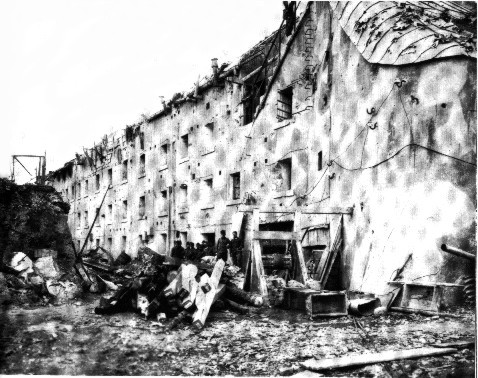
Back
side of heavily damaged
Fort
Luserna
Destroyed
turrets of Austrian Fort Luserna ,the concrete roof still intact
Destroyed
osservation turret of Austrian Fort Vezzena
Austrian
Fort Sommo Alto after heavy bombardment,but still intact
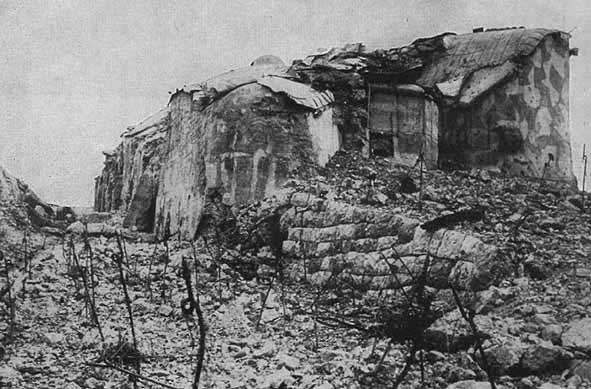
Austrian
Fort Lusern after heavy Italian shell firing, still, the Fort defended
itself with great success against any enemy attacks
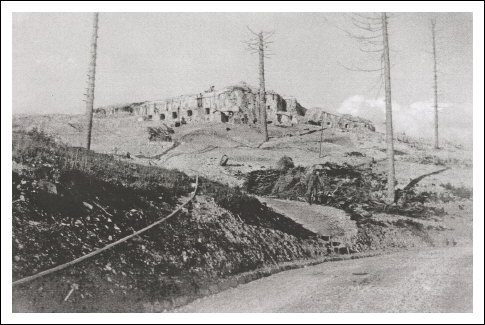
Austrian
Fort Verle, the entire area was completely destroyed by heavy Italian
shelling
He
put down his binoculars , looking to his comrade he said “What’s
that, do you hear it?”
From
the other side something was coming over, there was a deep roar in the
air, seconds later, the sound changed into a high whistling…….
There
was no time to ask ,no time to discuss.no time for explanation.
Suddenly,
there was a tremendous explosion in front of
Fort
Verena
, it shuttered like
being in an earthquake. Flying rocks, stones, a fiery heat blast
followed by rising smoke made one of the officers cry to heaven. It was
an incredible blast and the first time either of the officers had seen
anything like it.
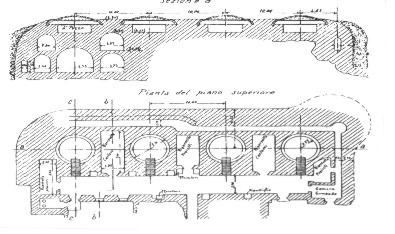
Plant
and section of Italian
Fort
Verena
The
first shot fell short. The Austrians
busied themselves making elevation adjustments.
Soon
a second M11 was sighted in and fired.
Once
again, the mountains amplified a sound like a huge hornet buzzing its
way to
Fort
Verena
.
Seconds
later, the shell impacted behind the fort……..too far!
On
both sides soldiers were raising their heads from the trenches. This was
a new sound, never heard before!
And
now it was becoming regular, every three or four minutes!
One
hit against
Fort
Campolongo
then another to
Fort
Verena
.
The
two Italian Forts were 5 Km from each other yet the impact of the shells
was easy to observe..
They
came closer and closer………..
Someone
said it was the fifth shell someone said it was the seventh, but there
was a direct hit on
Fort
Verena
. It hit behind the
third turret and penetrated 2 meters of concrete like paper , it
travelled down to the gallery then
exploded!!!!!!!….:
Forty
men died instantly together with their commander captain Umberto
Trucchetti, (2/3 of the squad died in less than a second!),
Ammunition started to explode in the casemates almost blowing the
fort in half!! Survivors were fleeing in shock.
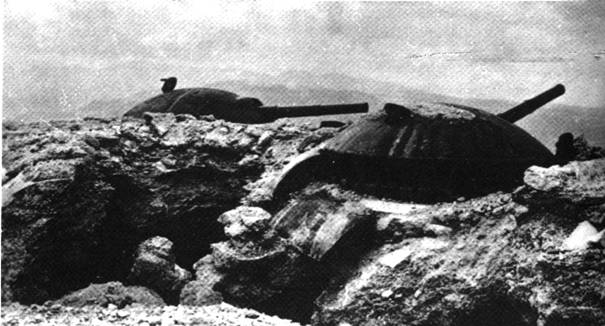
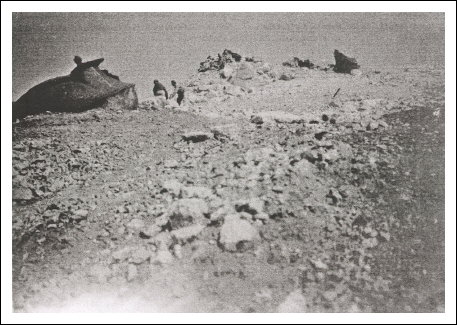
The
terrible hit of the M11 shell behind the 3.turret of
Fort
Verena
-The turret is
blocked, the front armament and protection of central axial bearing is
destroyed,behind the turret the big hole where the M11 shell penetrated
into the fort
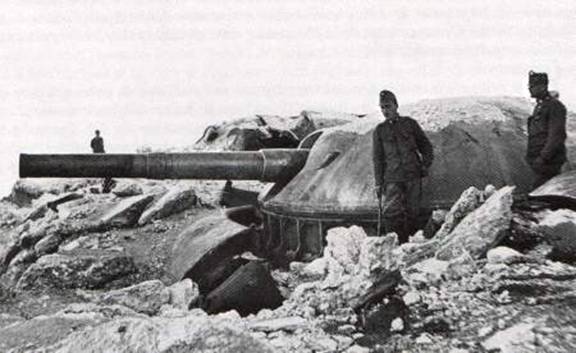
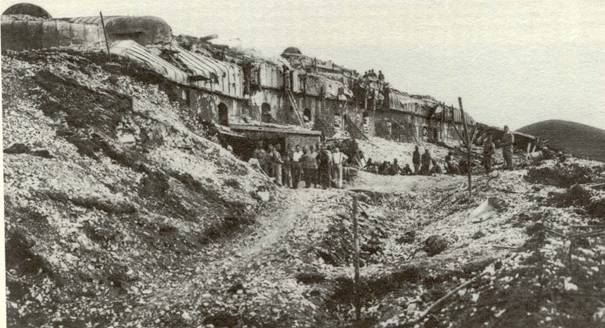
Austrian
officers on the roof of
Fort
Verena
after taking it
during 1916 summer campaign, turrets are blocked and
front armament destroyed
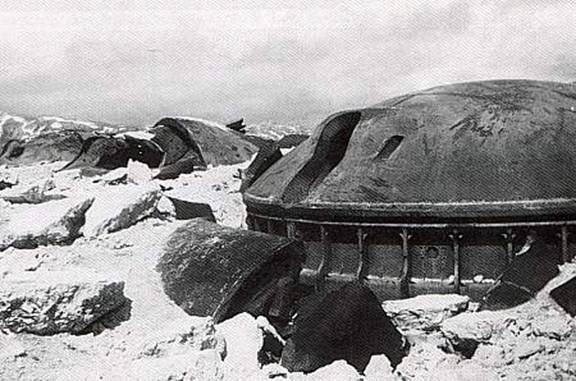
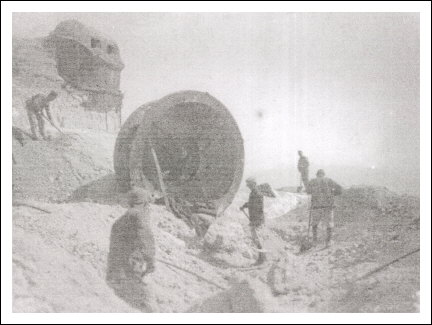
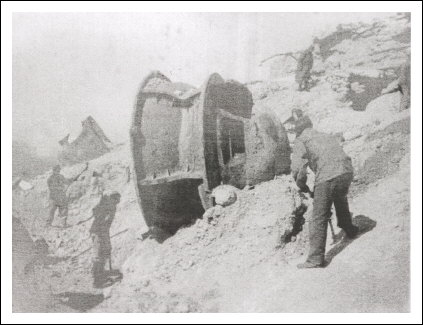
Austrian
pioneers disarmed
Fort
Verena
, in the back is
the central gun turret hit by a M11 heavy shell and completely
destroyed.
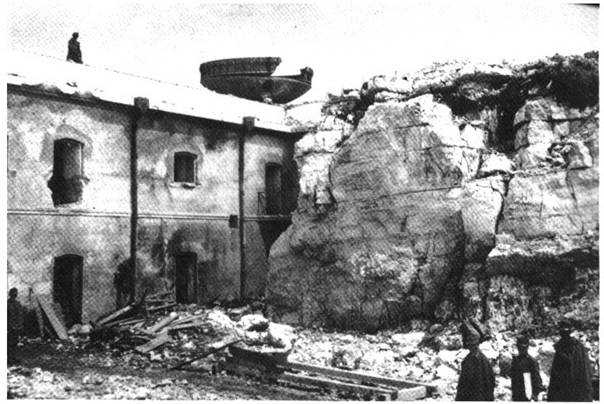
Italian
Fort Campolongo , the turrets were blown out, hit directly by M11 shells.
The
pic shows the Fort from behind
On
both sides soldiers were climbing out of their trenches, no one was even
thinking about shooting…. everyone was still in shock.
On
the hill of Costa Alta the two Austrian officers were smiling, and
thinking “job well done”. The mortar being perfectly adjusted, it
was time for a coffee break!..
Over
at Millegrobbe the squad of mortar No.1
were still busy working, (shell weight was 384 kilos).
Same
thing for the squad of mortar No.2 lo
cat
ed nearby at Vezzena,
and firing against Italian
Fort
Campolongo
. For them, there
wasn’t time for coffee!.
An
Italian squad of volunteers comanded by an unknown officer caught hold
of their senses and quickly armed the two remaining turrets of
Fort
Verena
. They opened a heavy
and wild fire against the presumed positions of the unknown guns but
with no effect. The long range cannons of
Fort
Verena
were not able to hit
the mortar positions. The
Austrians strategically lo
cat
ed them in places
that couldn’t be reached by cannon fire. The Italians needed mortars
or howitzers but didn’t have any.
.
The
Austrian mortars continued with their systematic destruction of the
Italian forts.
With
the M11’s sighted in, Forts Verena and Campolongo were hit every time.
Quickly, the squad of
Fort
Campolongo
started to
disassemble the remaining intact 149G Guns from the turrets, then back
to the trenches for cover!
In
half a day both forts were silenced forever never again to be rearmed.
(Prior
to this,
Fort
Campolongo
was still under
construction and the turrets weren’t installed.
The
turrets were ordered in 1914 from German Krupp steel facilities, but due
to a neutrality declaration by the Italian government (The Italian side
was an allied of
Germany
and
Austria
), the German
government stopped delivery of the turrets
so
Fort
Campolongo
was used only as
magazine and observation position.)
Four
149G cannons and 6 guns of 280mm relo
cat
ed near the Fort
were
used as target practice for the second Austrian mortar M11 Battery.
On
the same day, fire was directed against Italian artillery positions,
Most were destroyed or
heavily damaged in a very short time.
Italian
commanders were totally caught off guard by the Austrian mortar
batteries and it’s precision fire.
The
entire fortifi
cat
ion belt of sector 3
,section of Asiago –line Agno/Assa was completely destroyed with heavy
losses of men and material by only four 30,5cm/M11 mortars!!.
The
Italian defences built 1912-15 were state of the art modern construction
made to defend against all the weapons known to Italian command. Roof
armament was standard 2 meters of concrete without steel
Reinforcement.
Unfortunately
the concrete was weak because it was mixed with large stones and rocks
and any heavy shells especially the M11’s could easily penetrate it.
Italian
forts with their 149G
cannons couldn´t hit Austrian mortar positions behind the hills, it was
a strategic error to arm these forts with cannons instead of howitzers.
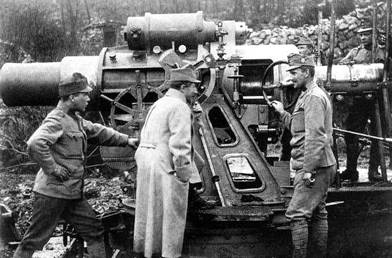
Reloading
the M11,there was a little bit of time to make some small talk,the main
destruction work was already done
During
1915 and spring 1916 all Austrian forts were repaired and reinforced
with better concrete roofs, now up to 5 m of thick. New armament and
heavy turrets arrived but they were still fitted with 100mm howitzers.
The
Italians started building
new mobile field artillery positions.
Until
May 1916 artillery duells between both sides continued, until the big
Austrian offensive, called the “Strafexpedition” or “punishment
expedition”. The offensive rolled off the entire Italian line and
brought Austrians from the mountains down to Asiago, where they were
finally stopped by Italian defenders. Austrian logistics were too poor
to advance and German reinforcements had not arrived.
During
the May 1916 campaign Austrians had a few new surprises. To assist the
mortars they brought the “Barbara and Gudrun" 380mm Howitzer The weapons were mobile and transported by a
Porsche Road
tractor.
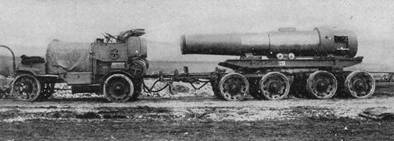
Skoda 42 cm Howitzer during transport with
Porsche Road
tractor
They
were lo
cat
ed nearby the M11
positions at Millegrobbe and Vezzena.
“Gudrun´s”
position was Malga Laghetto and with her heavy shells finished off
Fort
Campomolon
and it’s artillery
positions in a short time.
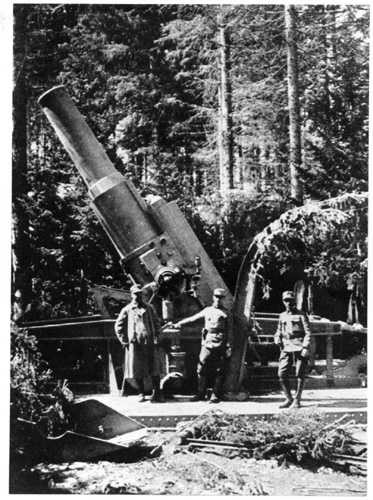
Heavy
380mm Howitzer “Barbara”,ready to fire
Total
grossweight of this arm was 81,7 tons,it was assembled from three pieces
like the M11 Mortar
Maximum
firing range was 14600 m
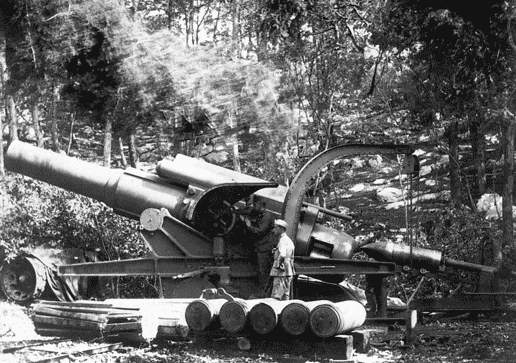
“Howitzer
“Barabara” during loading procedure,the shell weight was 740 Kg! In
front of the gun the prepared powder cans, one gunner is adjusting
elevation for the next shot
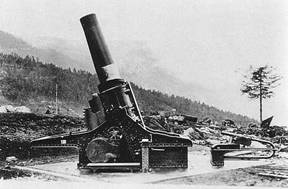
Howitzer caliber 420mm M16 nearby Malga Laghetto in the Lavarone
district,the biggest mobile Austrian howitzer
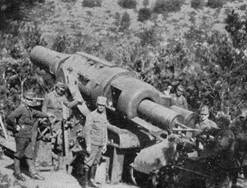
Loading Skoda 42 cm M16
Shell
weight was 1000Kg!!
Firing
range 14700 m
Grossweight
was 113 tons
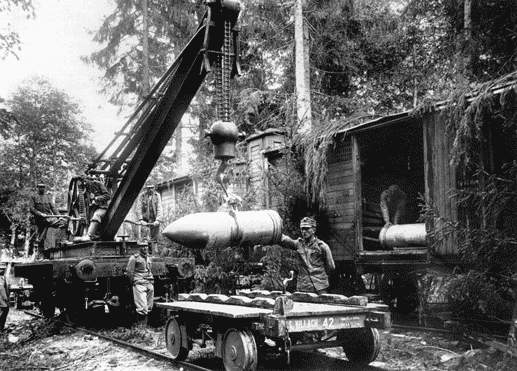
Transport
of heavy 420mm shells for Skoda 42 cm M14
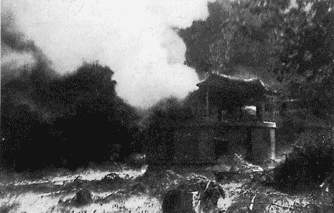
A
420mm/M14 howitzer being fired. It was lo
cat
ed near
Trento
at Rovereto. The
fire was against Italian positions at
Mt.
Pasubio
, called “mount of
blood” , due to heavy losses during war
“Barbara”
and the M11-Mortars supported the attack against Italian lines at
Mount
Verena
and
Mount
Campolongo
.
Within
one day all Italian defence positions were completely destroyed,
Austrians advanced with small losses and captured all Italian Forts and
positions.
The
Italian front broke completely and everyone retreated to Asiago.
The
Italians never recaptured their Forts, only when an armistice was signed
November
3rd 1918
did Austrian troops leave the positions.
Technical
data of Italian Forts:
Armament
of
Fort
Verena
:
4
turrets with 149G Cannons,2 cannons type 75A and 6 machine guns
Armament
of
Fort
Campolongo
:
4
Turrets 149G cannons and some smaller artillery devices.Machine guns
Armament
of
Fort
Campomolon
(still under
construction and not finished)
4
cannons 149G in field positions and 3 Batteries of 280mm cannons (6
guns).Also 4 cannons type 75A and some machine guns
Nearby
all Forts were lo
cat
ed other batteries of
medium and heavy calibers up to 280mm.
Edited
by Jim Haugh /Pennsylvania-USA,Cortesy of Jim Haugh
|